
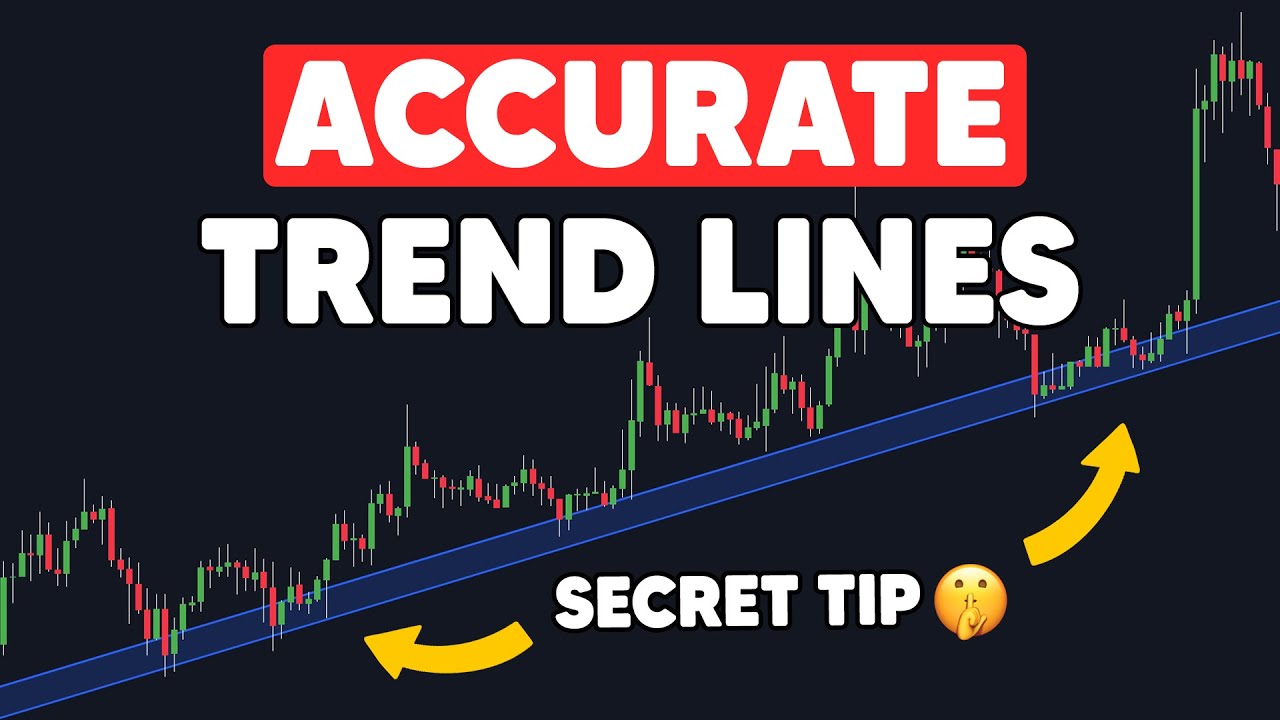
Day after day, I always see traders have confusion on how trend lines are actually meant to be drawn and what validates a trend line. How to trade breakouts and much more. walk through everything you need to know about trading trend lines, including a lot of secret tips that most traders aren’t talking about. Okay, so firstly, what is a trend line? Well, the simplest way to put it is that a trend line is an area of support or resistance during an uptrend or a downtrend. Markets in uptrends move
up and then have a pullback, then they move up again and have another pullback, and repeat this process over and over again. What this creates is highs and lows, which we can use to draw trend lines. Now a lot of people draw these completely wrong, and even sometimes people draw way too many, creating absolutely horrible charts that look like this. The correct way to draw a trend line is to find three significant points that line up and connect. You don’t want to consider insignificant highs and lows; you just want to focus on the most obvious tops.

and bottoms in the market, and to make this as easy as possible to understand, I’m going to first show you the ideal trend line, so the ideal trend line is in a market that has a lot of volume, three clean touches with good space between each, and we also wanted to have a near angle or less, you can use the candle wicks, and sometimes the candle closes within a trend line. It’s preferable to have it as just the wick, but if you have to use the candle closes at some points within a trend line, that can still be
acceptable So once you find a trend line with something like these characteristics, well, congratulations, you have an ideal trend line. Now we need to know how to trade this trend line. If the price actually comes and revisits this trend line again, then you need to look at what happens before making a decision: Is price going to use it as support or resistance and bounce off of it, or is price going to break the trend line? The best way to tell if price is going to bounce off of a trend line is to watch the price action as it approaches.
If price is smoothly approaching a trend line while still in an overall uptrend, we can expect price to bounce, and if price was in an uptrend making higher highs but is now making a clear lower high while approaching the trend line more aggressively, we could expect the trend line to break. So how do we trade a trend line breakout? Well, instead of rushing into a trade the moment price breaks out of the trend line, we want to wait for a retest as a more optimal place to enter. We do this because not all trend line breakouts actually work.
This is just the nature of technical analysis; there’s no such thing as absolutes. For instance, here you can see price broke down out of the trend line, and then it just came right back through, causing everyone trading the breakout to lose their trade. So instead of entering directly on the breakout, you ideally want to wait for the price to come back and retest the trend line, forming a new swing low or high to be confident that the trend has actually changed.
So now this is extremely valuable, and what a lot of pros Traders do this to avoid fakeouts and make everything a lot simpler. Instead of drawing regular lines, we can use the rotated rectangle tool to make it into a zone, so for this trade we could have noticed the trend line zone above right here since it already has three touches, and then instead of entering here, we could wait for a retest and some bullish price action to be more confident in entering a long position, and then you can see that the real breakout occurs.
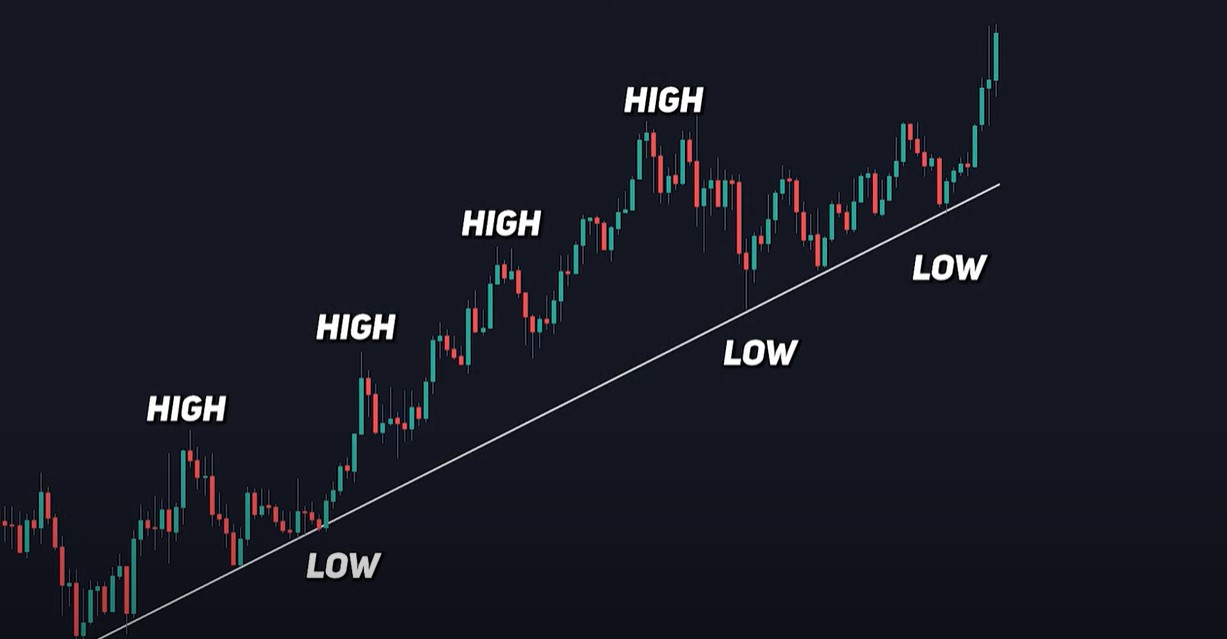
Trend lines can develop in many different ways, even on the higher highs in uptrends, and lower lows in downtrends, and by drawing them out like this, you’ll eventually notice chart patterns starting to form, so drop a comment below if you want me to cover everything about trading chart patterns.
Download